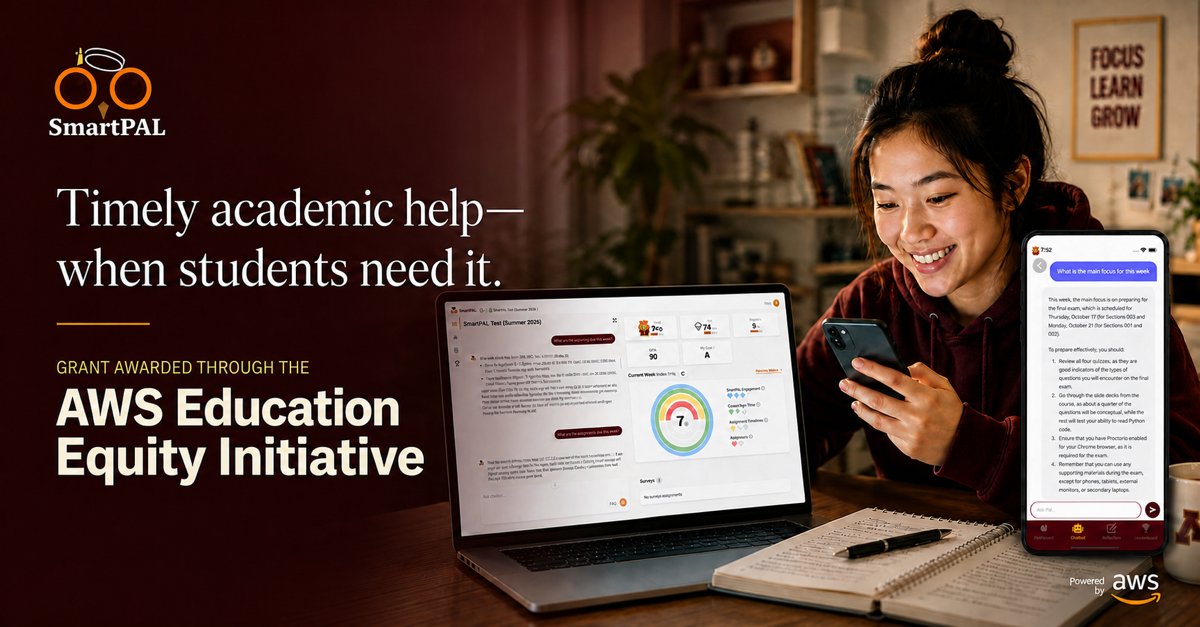
We are proud to announce that we have been awarded a grant to use AWS AI and cloud technology through the AWS Education Equity Initiative to support Pell-recipient and first-generation college students who lack timely, course-specific academic help outside class and office hours. This technology will enable us to reach approximately 4,000 students in selected University of Minnesota courses over the next 12 months, including an estimated 1,200 to 1,600 Pell-recipient and first-generation learners.
The access gap is often a timing gap
Students who most need academic help are often the least able to reach it. Office hours can overlap with work shifts or caregiving. Tutoring can require students to know where to look and feel comfortable asking. When help arrives too late, a small difficulty can become missed work, disengagement, or withdrawal.
Academic support should not depend on whether a student is free at the right hour, knows the right person, or is ready to identify themselves as needing help.
Support that lives inside the course
SmartPAL is a course-aware artificial intelligence learning companion that works inside Canvas. It is grounded in each class’s syllabus, materials, deadlines, and announcements—not the open web. Students can get help tied to what they are actually learning, including during evenings and weekends.
Every student in a participating section receives access. That design matters: Pell-recipient and first-generation learners can benefit without being singled out or asked to disclose personal circumstances.
An earlier signal for instructors
Students receive timely, course-specific help. Instructors receive the complementary view: earlier signals of recurring confusion and disengagement, while there is still time to respond.
The goal is not to replace instructors or the relationships that make learning work. It is to make routine help easier to reach and give instructors a clearer picture of where their attention can make the greatest difference.
What the next 12 months will make possible
This initiative will expand access in selected University of Minnesota courses and support additional capacity, stronger safeguards, and equity-focused evaluation. SmartPAL will examine when students seek help, how they engage over time, and whether the approach improves persistence and learning, while protecting student privacy.
The goal is simple: make course-specific help available at the moment it can change what happens next—and give instructors enough signal to act before grades reveal the gap.
For more information about SmartPAL, visit SmartPAL.org or contact contact@smartpal.org.